

"KONBU," Winner of the "PLUG IN│Editorial GRAND PRIX" at the March 2022 Show
"mate-mono," Komatsu Matere Co., Ltd.
UPLOADED 5 JULY, 2022
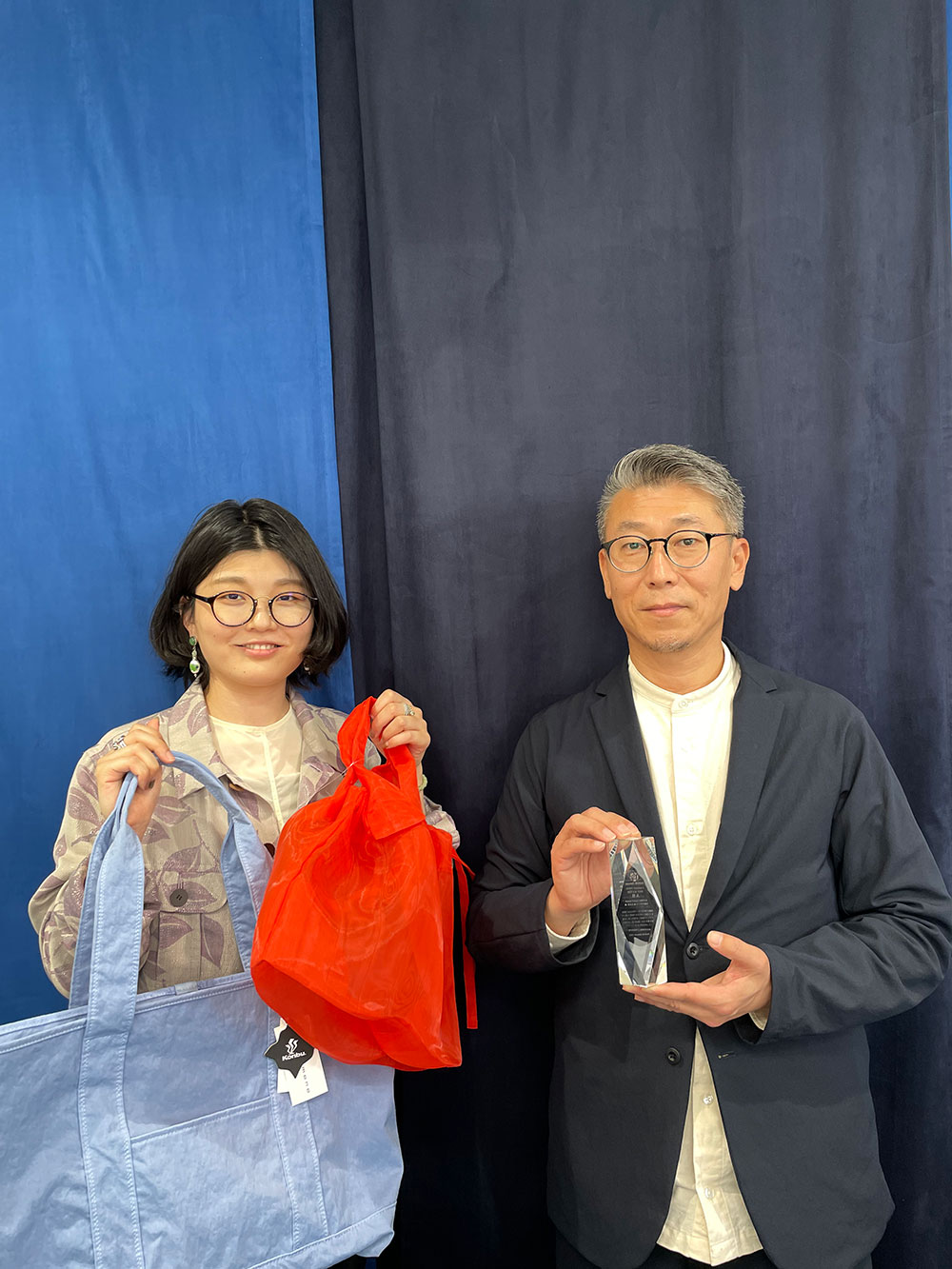
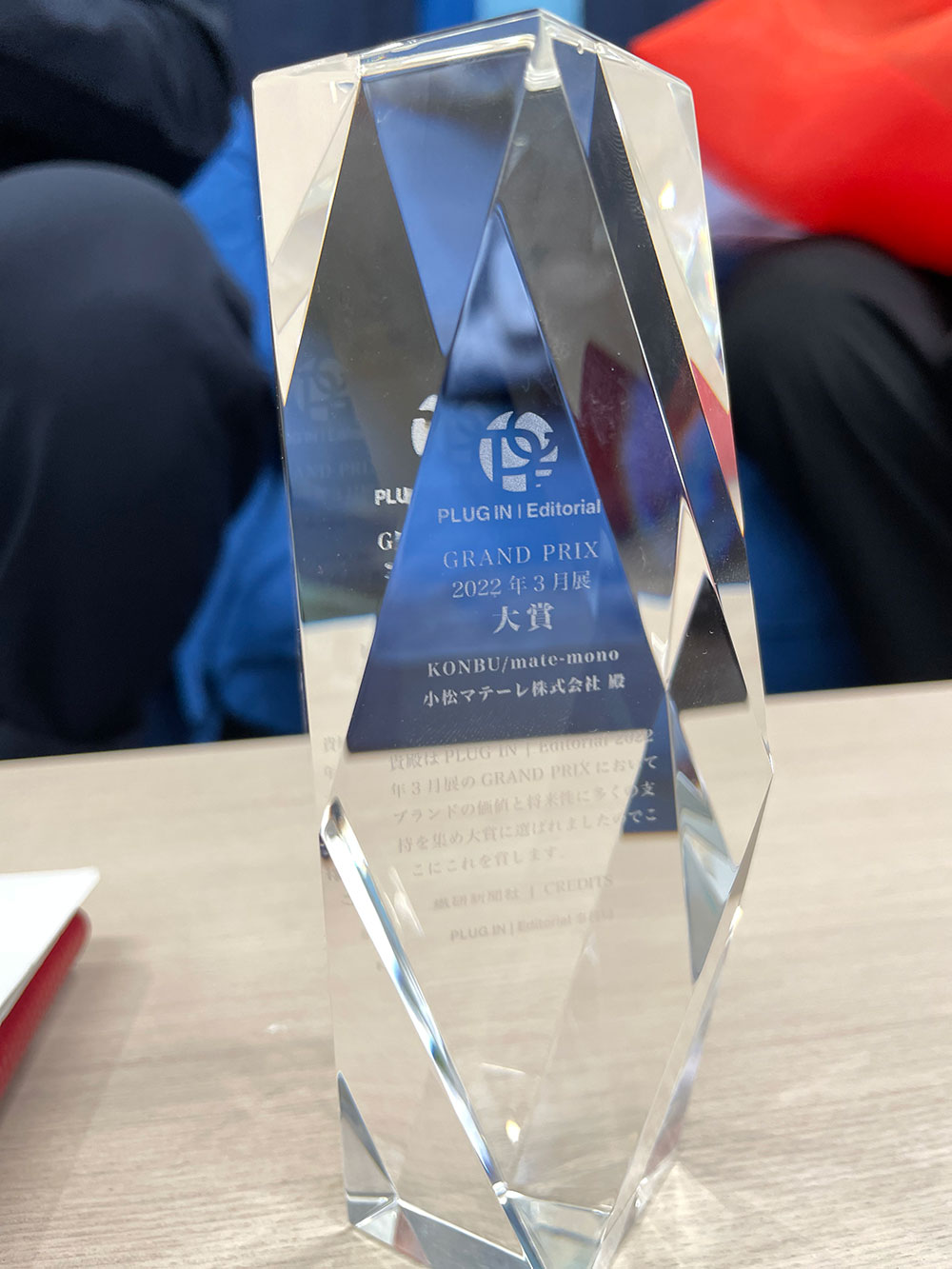
Komatsu Matere's "KONBU" and "mate-mono" took first place in the "PLUG IN│Editorial GRAND PRIX," which selects the brand that left the strongest impression on visitors at the March 2022 show.
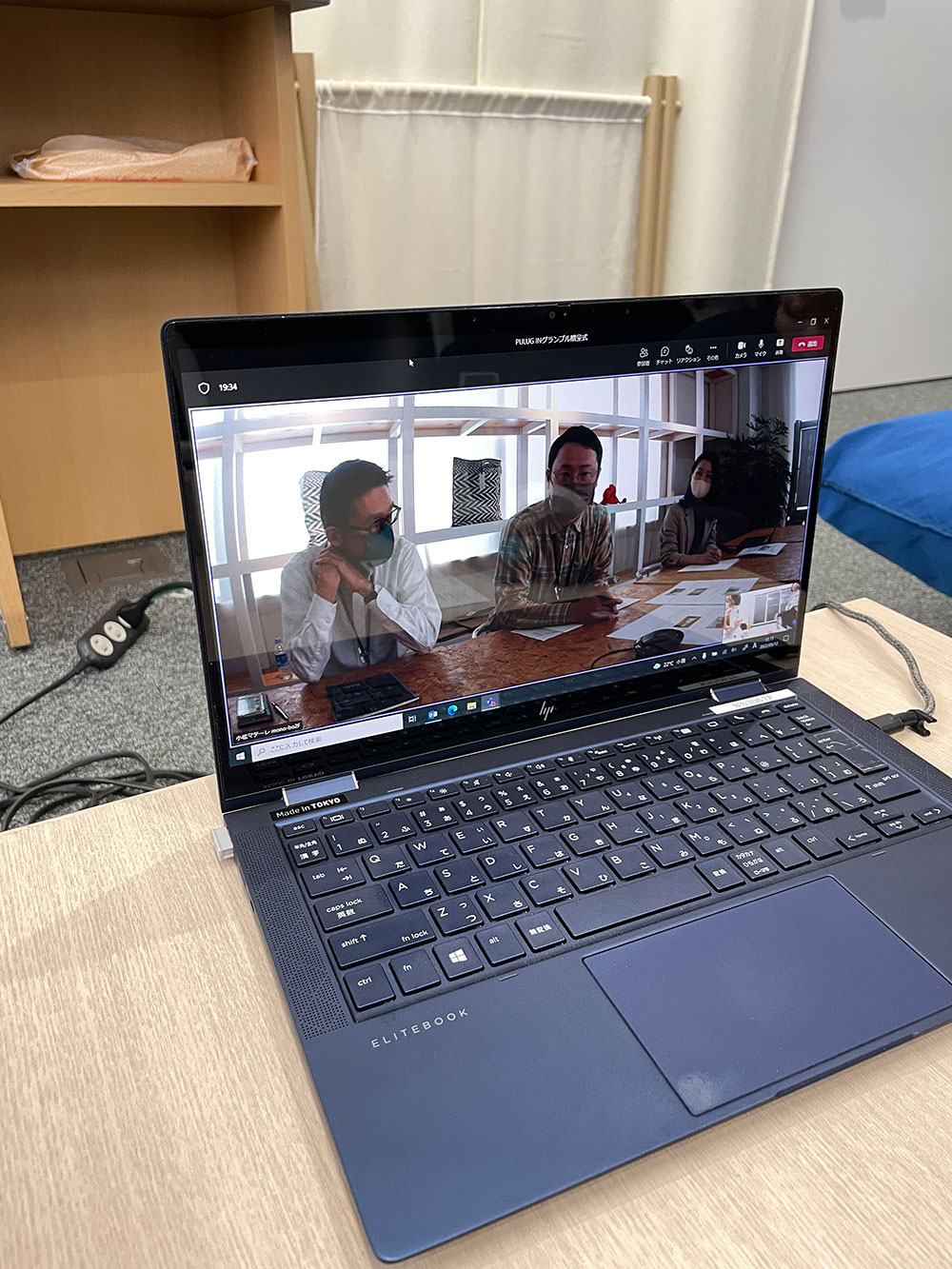
We recently presented the team with a commemorative crystal trophy. Tokyo Sales Office Manager Hideki Momosaki and Keiko Yoshida joined us in person, with Hiroaki Okubo and Ryota Furugori joining online from the head office.
Congratulations on winning the Grand Prix.
Thank you very much. We were very surprised. We spoke with a lot of visitors during the show and received all kinds of requests, so we felt we were making an impact — but to receive the Grand Prix on top of that.
We've exhibited at material-focused trade shows before, but this was our first time exhibiting at a product-focused show, so we're delighted.
What do you think led to such a positive response?
I think it created a synergy that the March show introduced a new sustainable area, making sustainability visible in actual products.
We feel the timing was right — sustainability is shifting from being talked about mainly for its buzz to genuinely taking hold — so it was good to be seen among a wide range of brands from many different fields.
Did launching the brand also mark the start of your sustainability efforts?
We've actually been pursuing technology development and production with an awareness of protecting the global environment for some time.
"mate-mono" came about from making effective use of the offcuts generated during material manufacturing, and the bags using our high-performance processed material "KONBU" weren't originally planned with sustainability in mind either — neither began with commercialization or a brand business as the premise.
I see. So where did the motivation to exhibit come from, then?
It actually started with mask production during the pandemic, which led us to begin e-commerce sales and start a B2C business.
After that, wanting to share the appeal of textiles with more people, we opened a factory shop and launched "mate-mono" at the same time.
Rather than professional shop staff, our own employees took turns standing at the counter, talking with customers about the story behind the products.
With "KONBU," the aim was to appeal to more people about a material that's already popular in our B2B business; with "mate-mono," the main focus was raising our corporate value by using sustainability as a concept to convey our company's stance, inside and outside the industry.
And beyond that, we wanted to take sustainability a step further than "mottainai," eco, and reuse, and propose it within the world of fashion.
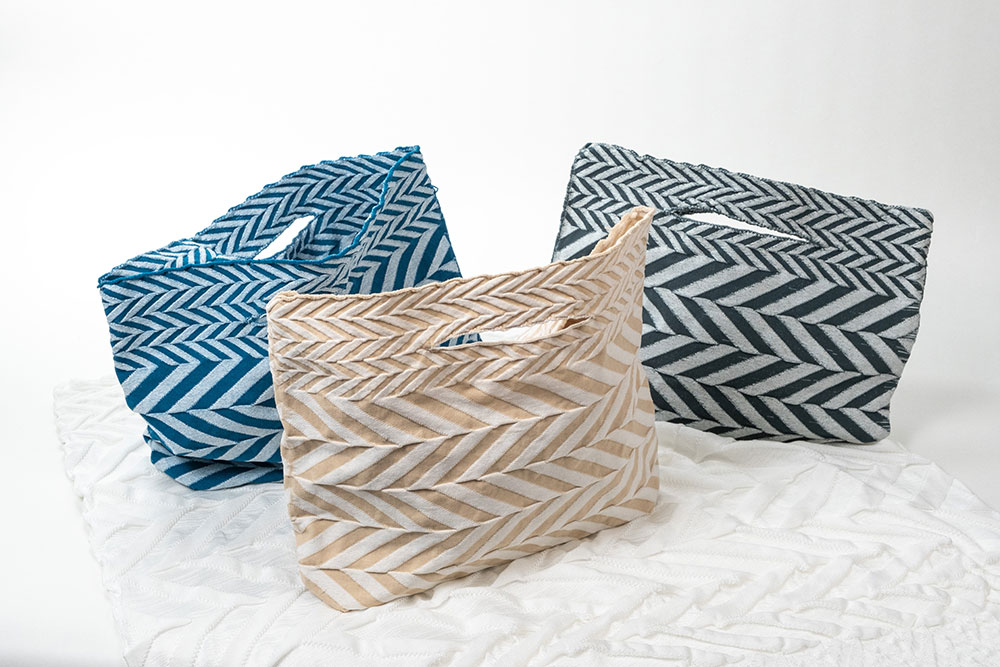
The see-through bags have a strong fashion sensibility.
Thank you. The material for the see-through bags wasn't chosen with bag-making in mind — it came from a solution built around using material that had been deemed off-spec, giving it new value by making the most of it.
An eco bag simply made from scrap material has no real value on its own, and even a high-performance material won't sell if it has no fashion appeal.
The seamless product series we're currently proposing generates no fabric-cutting waste, and because it's product-dyed, inventory loss is also low — but that's not the whole selling point. We're careful to reflect seasonality and trends through the knit structure and color as well.
How has the response been since exhibiting?
We've had a lot of inquiries centered around pop-up shops, and real results. Test marketing at "Editorial" in Seibu Ikebukuro also went well.
It's become a good cycle — exhibiting at the trade show led to pop-ups, and people who saw those got in touch, leading to the next pop-up. It's like a chain reaction (laughs).
What are your plans going forward?
We'd like to raise our corporate value through B2C while growing it from corporate branding into an independent business.
We intend to keep our product lineup from spreading too thin and differentiate ourselves within sustainability. The individual pieces are coming together.
Since we handle everything ourselves — planning, pop-ups, e-commerce sales, sales-floor design, and store operations — we want to take our time polishing each piece, and build a collection that's small but rich and substantial.
What we need to do is thoroughly carry out what's simply expected of any manufacturer: the right timing, the right product, the right quantity, and the right price, without waste; cutting out inefficiency while also pursuing profitability; and staying committed to stylish, valuable manufacturing by upcycling offcuts. We believe that's what leads to sustainability.
【Exhibiting Brands】
"KONBU": A high-performance processed material with the firmness of kombu seaweed, combining a dry feel with suppleness.
"mate-mono": A brand that upcycles offcuts and scrap generated during manufacturing.
Both translate the development capability and strengths of a fabric maker into products such as bags. The company has also formulated its own "Sustainability Vision" to address environmental issues.
【Office Notes】
As the office, we're delighted that the Grand Prix was chosen from the Sustainable Products area newly introduced at the March show.
At the same time, we deeply resonate with Komatsu Matere's stance — approaching sustainability seriously, not as a trend, a talking point, or simply a way to boost profit.
We hope this award becomes a catalyst for the kind of movement that carries sustainability all the way through into products on a lasting basis, and from there into raising corporate value and reforming the industry, distribution, and the market. (Staff N)